

Go Ahead, Pick my Brain.
It's just sitting there...

The Boring-ass Guide to Breaking Into Comics seemed to strike a chord with a lot of you folks! I’m glad so many of you found it helpful, and welcome to all our new subscribers!
I really enjoy using this space for more than just talking about the next comic I have coming out, so I am going to try and post stuff like that more, just insights into the industry and my creative process. I think its just interesting to talk about, and if it helps anyone out there launch a comic, or a career in comics, even better.
In the spirit of that, I’d like to invite any and all of you to send your questions my way, and I’ll do my best to answer them. As previously advertised, my advice probably won’t feel like a shortcut or a trick, just me honestly sharing what I’ve learned, with no guarantees.
A few of those questions have already rolled in, and wouldn’t you know it, I’ve got answers!

Greg Tjosvold writes:
Rich, Any advice on how chill to be with the publishers like DC who don’t take unsolicited submissions. Is a “May I send a pitch” email too weird? Waiting to be noticed seems _too_ chill but maybe it is just the painful part of the journey. Thoughts?
Hey Greg!
It’s definitely not one of the painless ones, lol. To be brutally honest, if you don’t have a pre-existing relationship with an editor, like having met them at a con, or introduced yourself over email or social media and gotten a response (that part is key), you’re not going to hear back. It’s not weird, exactly, it’s just not going to work.
What I would recommend is working in the spaces you do have access to and really doing good work there, then using that work to try and open up new spaces.
Quick example from my own career - the very first licensed work I did was on TMNT, but I didn’t get that job by asking for it directly. I knew Bobby, the editor, because we had worked together on Gutter Magic when it was published at IDW. I just let him know I liked what they were doing with the Turtles and would love to write something if the opportunity came up. It took a while but eventually he had a slot for me.
But going back even further than that, I wouldn’t have worked with Bobby if I hadn’t first worked with Andy Schmidt at Comics Experience. It’s a little different because it was a writing course but still, the scripts and shorts I produced with the program impressed him enough to get the invite to do Gutter Magic at IDW in the first place.
I’m sure I could have pitched it on my own, too - I did send it into Shadowline at Image, which had open submissions at the time - Jim Valentino liked it but ultimately passed. But IDW didn’t have the same submission policy so it would have gone unread without Bobby or another editor giving me the ok to send stuff in.
I’ve just found that rather than try to push yourself into spaces you’re not invited into, it’s more fruitful to really kick some ass in the spaces you are in - word does get around and bit by bit you get invited into more.
If it’s any consolation, I find it very difficult to pitch Marvel or DC myself with projects or ideas that are unsolicited. They just have so much going on at any given moment it’s like throwing darts blindfolded - “Here’s a kickass Superman story set in Metropolis!” “Uh, Superman’s going to be in space for the next year or two.”
So I just focus on keeping editors up to date with what I’m doing, how I like what they’re doing, and leave it at that for the most part. Could I be more proactive? Maybe. But there’s a fine line between persistence and desperation that I feel like I’ve inadvertently crossed in the past, and I don’t ever want to be in that spot again, emotionally.
I don’t believe in the woo-woo idea of manifestation, but for me at least, it’s healthier mentally to just keep those goals and dreams in mind as I work towards paving the way for them to come to me, rather than chasing after them and getting frustrated when things that aren’t under my control get in the way.
From Dan Benamour:
I’m really interested in the comic book world - but all the research and conversations I’ve had with friends who have gotten into the space basically amount to either paying for the comic book yourself or doing a Kickstarter. Are these basically the only two ways in, if you are a writer (not the artist)? Is success in other mediums (I’m a produced screenwriter of film and television, I’ve written/directed/produced multiple #1 fiction podcasts, and I’ve optioned/set up cinematic short stories with major companies like Amblin and Smokehouse) relevant to comic book companies?
Interesting question Dan! The thing is, you’re going to need to take my answer with a grain of salt, because I don’t have any direct experience as far as being successful in film or TV myself, so everything I can tell you is pretty much from observation and hearsay. Which is all to say, YMMV.
In general, yes, you do need to produce a comic one way or another to really make any headway. There are certainly some publishers where you can go in with just a pitch, not having an artist attached, but it makes it harder to get a yes if you don’t have any produced comics to show you can make something out of that pitch, even if its a killer one.
It’s a bit harder as a writer in that nobody really reads scripts blind - if you send one in as a submission it’s not likely the editor will have the time or inclination to read the whole thing, which is why projects get approved on pitches, which are generally 1-3 pages delivering the hook, synopsis, and other things that sell the idea, ideally accompanied by artwork.
It’s as much a question of time as anything, because what you are really fighting for with editors is their time; the reason I prefer to send finished pages is because you can look at those page and not only get the story hook, but also the vibe, atmosphere, character designs, etc, just from those pages, as opposed to asking them to read multiple pages of script and story they may not be able to prioritize.
That being said, I very rarely pitch with an entire completed issue. It’s usually between 5-10 pages of issue 1, that aim to get all that across. It’s an investment, yes, but probably a fraction of the money a typical film production would spend even on a short proof of concept.
As to whether having Hollywood experience helps, that’s the part I can’t really speak directly to, but I imagine it can in certain cases. If you’ve produced something well-known or that an editor is familiar with, it certainly can’t hurt, and may help make a cold email get a little warmer. And I can’t say for sure, but I know at least a few projects get greenlit on the basis of already having a media deal in place. But like I said, I don’t have any direct experience with that.
My advice would be, if you have people, then have your people call their people, and see what meetings they can set up. If you don’t, and you’re reaching out cold, absolutely include your film experience, but don’t expect the doors to fly open just because of it.
Again though, even if it might seem daunting and expensive, I encourage you to try and get something done on your own, even if it’s just a short. If nothing else, you’ll learn what the process is like, meet some like-minded people, and as much work as it is, I promise it’s a hell of a lot of fun, too!
And finally, from James Ferguson:
When pitching to an editor, do they give you a preferred format? Or do you go with what you’ve used in previous pitches?
I’ve never seen a standardized or preferred format, no. Most of what I do is gleaned from getting to know my editors, what they respond to, and trying to tailor the pitch to that.
For example, one editor I’ve worked with really likes the process of finding artists and matching them to projects, so I feel confident sending them pitches without a creative team attached. Another, however, loves concept art and full pages, so I usually don’t hit them with pitches that don’t have at least some visual component.
But, I’d never have found either of those quirks out if I hadn’t pitched in the first place, and through trial and error learned what they tended to like. So I’d say a lot of it is still just going with your gut and hoping for the best, while being open to learn and adjust your approach as necessary.
Still, though, there are some general formatting rules you can follow. I think for an initial contact, brevity is really important. I try to keep things to one or two pages max unless I have a relationship with the editor and I know they are going to read it. As I said to Dan, time is always at a premium, and I don’t want to ask for more than they have at any given moment.
The other reason I think it’s important is that the goal of a pitch isn’t necessarily to sell the entire story - it’s to hook the editor. If they’re interested, but want to see a more in-depth synopsis or outline, they will tell you, and you can send them the expanded pitch. But that first contact, what you should be going for is less the immediate greenlight and more “This sounds awesome, tell me more.”
Hearing “we love this, lets do it” is still great, don’t get me wrong, but it’s rarer than you might think, because books often have to go through multiple stages of approval anyway - but the editor who is your point of contact will be shepherding it through that process, and will absolutely let you know what they need from you to help it along.
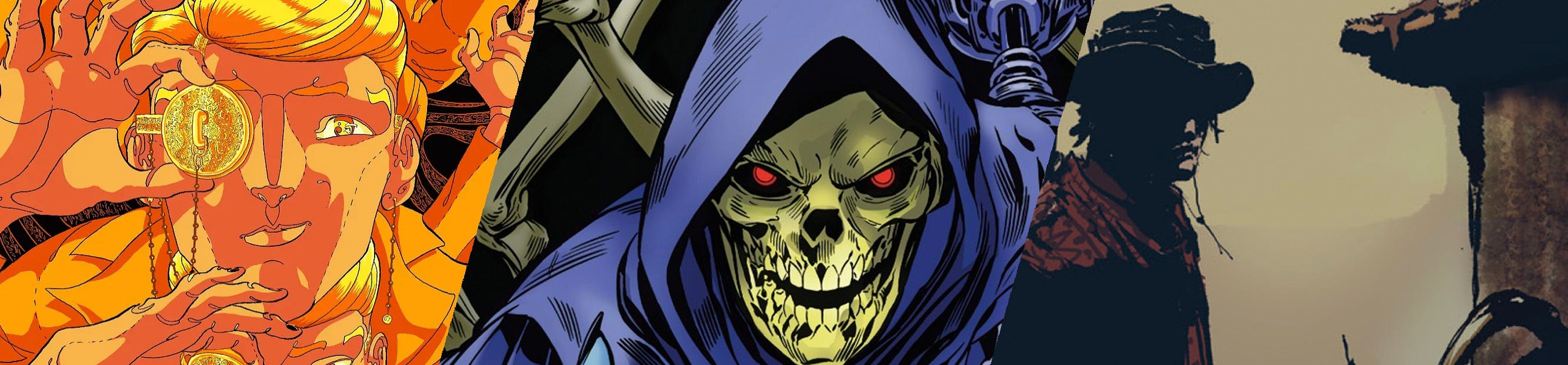
That’s all for this installment - I do have stuff coming out soon, so the next newsletters will be highlighting some of that - specifically more Black Eye, Masters of the Universe: Genesis, and The Man Who Outdrew Death in July’s issue of Hello Darkness.
I’m also in the process of making arrangements for SDCC, and I should have at least one panel and one signing where you can catch me if you’re planning to attend. More on that soon.
Until then, my friends.
- Rich
What’s something a writer/illustrator usually gets wrong when putting idea to page for their first attempt at comics?